Last year we carried out an experiment to see if it was possible to detect apogee (for parachute deployment) using only the sound of air rushing past the rocket. Here is a video of that experiment and the circuit that was used.

Monday, March 13, 2017

Saturday, January 07, 2017
More Polaron G2 Flights
Happy New Year everyone!  It's been a while since the last post so we wanted to start off the year by posting a new video. This one is from September when we flew our
large Polaron G2 rocket again with fall away boosters.
It's been a while since the last post so we wanted to start off the year by posting a new video. This one is from September when we flew our
large Polaron G2 rocket again with fall away boosters.
At the end of the video are also club member's HPR rocket flights that took place on the same day.
Although we published this video a couple of months ago, I am including it with this post as it was filmed on the same day. It is the first flight of our Light Shadow rocket:
Here is the flight report from the day with additional photos:
http://www.aircommandrockets.com/day180.htm
We hope to start publishing videos and flight reports again on a more regular basis this year.
It's been a while since the last post so we wanted to start off the year by posting a new video. This one is from September when we flew our
large Polaron G2 rocket again with fall away boosters. At the end of the video are also club member's HPR rocket flights that took place on the same day.
Although we published this video a couple of months ago, I am including it with this post as it was filmed on the same day. It is the first flight of our Light Shadow rocket:
Here is the flight report from the day with additional photos:
http://www.aircommandrockets.com/day180.htm
We hope to start publishing videos and flight reports again on a more regular basis this year.
Tuesday, September 20, 2016
L1ght Shadow - High Power Water/Pyro Rocket
We have finished building our new rocket called L1ght Shadow that is able to fly on both 38mm H and I motors or Compressed air and water. Here is a couple of videos that show its construction. We intend to use this rocket to get our L1 certification if it works. :)
The full build log is also available here: http://www.aircommandrockets.com/light_shadow_1.htm
The full build log is also available here: http://www.aircommandrockets.com/light_shadow_1.htm
Thursday, June 30, 2016
Windy Launch at Mullaley
On a recent trip to NSWRA's HPR launch site at Mullaley the conditions were less than favourable, and so we didn't get to launch our big Polaron G2 rocket. In the 30km/h+ wind conditions I don't thing it would have even been possible to make it stand vertically. So here is a highlights video from the rest of the day.
Although a little dissapointed, we were still happy to catch up with club members and watch some of their rockets launch. We'll be back at the launch site in September for another try. (Hopefully also with a new rocket project we've been working on ;) )
Thursday, June 02, 2016
How to measure the altitude of your rocket
Earlier this year we looked at 4 different techniques for measuring the altitude of a water rocket. We used all 4 techniques on the same flight so we could compare them for their accuracy. We repeated the experiment 3 times just to make sure. Here is a highlights video that looks at the results as well as the reasons for their differences.
Saturday, August 15, 2015
Fog and Long Camera Boom
We're continuing to catch up on the launch reports from the last couple of months.
On June 14th when we arrived at the launch site there was still some fog so we quickly launched a rocket to see if we could get above it.

We also flew a long boom on the rocket to see if we could get a shot of the entire rocket side on.
 Here is a highlights video from the day: https://www.youtube.com/watch?v=aQSiEX9Kyf4
The full flight day report is available here: http://www.aircommandrockets.com/day161.htm
On June 14th when we arrived at the launch site there was still some fog so we quickly launched a rocket to see if we could get above it.

We also flew a long boom on the rocket to see if we could get a shot of the entire rocket side on.

The full flight day report is available here: http://www.aircommandrockets.com/day161.htm
Tuesday, August 04, 2015
Looking At Measurement Errors
We've been quite busy over the last 3 months, though we have had time to
build and launch rockets, just not write about them. I am now finally
catching up on the launch reports.
Here is the first one from back in March. We looked at the variability in measurements, as its important to understand their magnitude when doing various performance comparisons.
https://www.youtube.com/watch?v=4vz0Xb_Me5E

The full report is available here: http://www.aircommandrockets.com/day159.htm
Here is the first one from back in March. We looked at the variability in measurements, as its important to understand their magnitude when doing various performance comparisons.
https://www.youtube.com/watch?v=4vz0Xb_Me5E

The full report is available here: http://www.aircommandrockets.com/day159.htm
Monday, April 06, 2015
Dark Shadow flies to 1752 feet (534m)
Dark Shadow is our latest water rocket project. Construction on this
project began in June last year, and we had a chance to fly it 3 times
at the recent Thunda Down Under event in Westmar QLD.
The rocket was designed to try to set a new personal best altitude record. We progressively increased the pressure on subsequent flights to finally achieve an altitude of 1752' or 534m.
Here is a highlights video of the 3 flights:
https://www.youtube.com/watch?v=4r9gmLfpFTg
The full flight report is here:
http://www.AirCommandRockets.com/day158.htm
I have also uploaded the build log that has full details about the rocket's construction here:
http://www.AirCommandRockets.com/dark_shadow_1.htm


The rocket was designed to try to set a new personal best altitude record. We progressively increased the pressure on subsequent flights to finally achieve an altitude of 1752' or 534m.
Here is a highlights video of the 3 flights:
https://www.youtube.com/watch?v=4r9gmLfpFTg
The full flight report is here:
http://www.AirCommandRockets.com/day158.htm
I have also uploaded the build log that has full details about the rocket's construction here:
http://www.AirCommandRockets.com/dark_shadow_1.htm
Thursday, March 26, 2015
Polaron G2 - Phase 2 Flights
Fast forwarding a few months ....
Two weeks ago we had the opportunity to fly our full size Polaron G2 rocket with boosters at Australian Rocketry's Thunda Down Under international launch event in Westmar QLD.
We were glad to finally get this rocket in the air after several years of development. It didn't take several years to build, we just procrastinate a lot.
 We flew the rocket successfully a couple of times, and are looking to now move on to Phase 3, - adding a 2nd stage to the main stage. We are likely to fly this rocket again in the current configuration though in calmer conditions as the two recent flights were affected by strong wind and didn't go as vertically as we would have liked. There may have also been a small stability issue close to booster burn out due to the large amount of water still in the bottom of the main stage that used a very small nozzle. This rocket had been designed for a long burn rather than altitude. It had a predicted burn time of around 10 seconds. We didn't quite achieve that but at ~8 seconds it was still fun to watch.

We've posted a video of the flights here:
https://www.youtube.com/watch?v=Cnripxx0TeU
And the full G2 launch report with photos (day 157) is available here:
http://www.AirCommandRockets.com/day157.htm
Two weeks ago we had the opportunity to fly our full size Polaron G2 rocket with boosters at Australian Rocketry's Thunda Down Under international launch event in Westmar QLD.
We were glad to finally get this rocket in the air after several years of development. It didn't take several years to build, we just procrastinate a lot.
We've posted a video of the flights here:
https://www.youtube.com/watch?v=Cnripxx0TeU
And the full G2 launch report with photos (day 157) is available here:
http://www.AirCommandRockets.com/day157.htm
Tuesday, October 07, 2014
Axion G2 flights
A few photos from this weekend's launch of the Axion G2 rocket with the lower half of the Polaron G2 boosters. This configuration represents only about half of the final Polaron G2 capacity.


I'm still working on full flight report and highlights video from the launch weekend.
Ready for launch
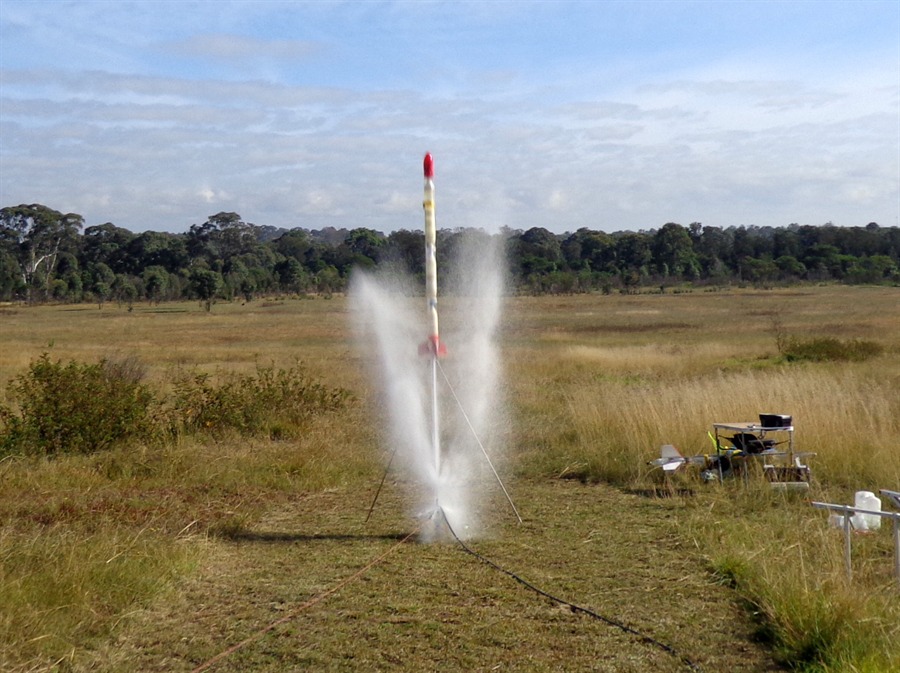
Boost phase - This rocket was launched at full pressure.
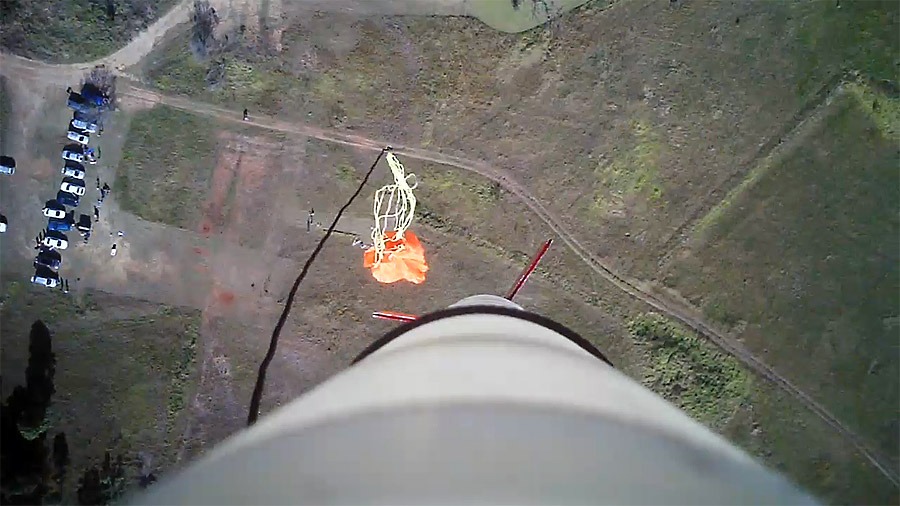
Near apogee shot from sustainer.
The cars (in the lower center left of image next to the rocket) were at the launch site.
I'm still working on full flight report and highlights video from the launch weekend.
Thursday, September 25, 2014
G2 update
As we continue development of the Polaron G2 rocket, we are preparing to launch a smaller version to test the launcher at full pressure with both the main stage and boosters. We have tested the launcher release mechanisms individually at full pressure, but this will be the first time we do a high pressure synchronized release.
The boosters in this test are only the lower half of the final flight hardware G2 boosters. Each of the boosters in this test has a capacity of 5.25L. We are using a rebuilt Axion G2 rocket for the main stage with a capacity of 8.2L. All up for this test the we will use 8.6 liters of water per launch.
We are also testing the new booster retention mechanisms that will be used on the final rocket. We have previously tested half the mechanism on the main stage, but now we're testing the booster half of it as well.
We'll be launching this rocket at our high power launch site in about a week and a half.

The boosters in this test are only the lower half of the final flight hardware G2 boosters. Each of the boosters in this test has a capacity of 5.25L. We are using a rebuilt Axion G2 rocket for the main stage with a capacity of 8.2L. All up for this test the we will use 8.6 liters of water per launch.
We are also testing the new booster retention mechanisms that will be used on the final rocket. We have previously tested half the mechanism on the main stage, but now we're testing the booster half of it as well.
We'll be launching this rocket at our high power launch site in about a week and a half.
Monday, November 18, 2013
Polaron G2 Progress Update
We've been continuing with the Phase 2 development of the Polaron G2 rocket over the last couple of months. I've added a number of photos to the build log here:
http://www.aircommandrockets.com/polaronG2.htm#_171013
I've also included a video of how we reinforce the spliced bottles with fiberglass. All the fiberglassing is now done so next we need to do some pressure testing on the segments. We have also been making progress with the new launcher we are building for the rocket.
Here is a mockup of the final rocket configuration, with the boosters just taped to the side because the retention mechanisms are not finished yet. ... we're going to need a taller ladder, or use the tree.

http://www.aircommandrockets.com/polaronG2.htm#_171013
I've also included a video of how we reinforce the spliced bottles with fiberglass. All the fiberglassing is now done so next we need to do some pressure testing on the segments. We have also been making progress with the new launcher we are building for the rocket.
Here is a mockup of the final rocket configuration, with the boosters just taped to the side because the retention mechanisms are not finished yet. ... we're going to need a taller ladder, or use the tree.


Tuesday, October 29, 2013
Quick update
Although we haven't done an update for a while, we've been continuing to work slowly in the background on a couple of projects. The delays with the updates have been mostly due to not being able to launch at the regular Doonside launches with our local rocket club because of the total fire bans here in Sydney. There have been many bush fires in the area recently. We could launch at the local park but the launch site is a little too small for comfort.
My wife also spent a week in hospital after surgery and so I've had to do more work around the house with the kids and helping them with their school activities. Life is settling back to a more relaxed pace now so I'll have time to do updates on a more regular basis again. When I have limited time for rockets, I prefer to build them than write about them.
We've been fiberglassing more spliced-quads for the Polaron G2 rocket over the past week and have been discussing with dad about the launcher modifications we'll need to make for the rocket. We'll post more on this in the Polaron G2 build log in the coming days.
Last month we also did some static tests on another rocket as a part of the upcoming test flights at the next launch. We'll post the video of these tests at the same time as the flight tests when we've had a chance to actually launch the rocket.
My wife also spent a week in hospital after surgery and so I've had to do more work around the house with the kids and helping them with their school activities. Life is settling back to a more relaxed pace now so I'll have time to do updates on a more regular basis again. When I have limited time for rockets, I prefer to build them than write about them.
We've been fiberglassing more spliced-quads for the Polaron G2 rocket over the past week and have been discussing with dad about the launcher modifications we'll need to make for the rocket. We'll post more on this in the Polaron G2 build log in the coming days.
Last month we also did some static tests on another rocket as a part of the upcoming test flights at the next launch. We'll post the video of these tests at the same time as the flight tests when we've had a chance to actually launch the rocket.
Monday, August 19, 2013
Gravity Mechanisms
We had a great launch weekend last week with beautiful weather conditions. We also finally flew an experiment that we've been wanting to do for a while.
One of the things that we see quite often are designs for parachute deployment systems based on "gravity" mechanisms that attempt to detect apogee when the rocket tips over.
So we flew a couple of experiments that show what actually happens to these mechanisms in flight:
The full write up of the experiment is here:
http://www.AirCommandRockets.com/day136.htm
This includes photos and a highlights video from the whole day. We also had a go at using the 240fps mode on the GoPro which turned out quite well. We're not quite game yet to put the GoPro on a rocket. We could probably protect it from impact, but the real danger is getting it stuck up in a tree.
We are going to fly a few more mechanisms in the coming weeks to demonstrate how they behave.
One of the things that we see quite often are designs for parachute deployment systems based on "gravity" mechanisms that attempt to detect apogee when the rocket tips over.
So we flew a couple of experiments that show what actually happens to these mechanisms in flight:
The full write up of the experiment is here:
http://www.AirCommandRockets.com/day136.htm
This includes photos and a highlights video from the whole day. We also had a go at using the 240fps mode on the GoPro which turned out quite well. We're not quite game yet to put the GoPro on a rocket. We could probably protect it from impact, but the real danger is getting it stuck up in a tree.
We are going to fly a few more mechanisms in the coming weeks to demonstrate how they behave.
Monday, June 17, 2013
7 Years of ....
In order to celebrate 7 years since our very first launch we've put together a video of some of the valuable lessons we've learned over the years. Unfortunately hundreds of bottles were harmed in the making of this video.
We've also had another good launch last weekend with the Inverter and the Axion G4 rockets. Here is a full update with a highlights video:
http://www.aircommandrockets.com/day134.htm


We've also had another good launch last weekend with the Inverter and the Axion G4 rockets. Here is a full update with a highlights video:
http://www.aircommandrockets.com/day134.htm
Monday, May 27, 2013
Finding Rockets and Projects update
We have updated our main website with the progress of what we have been up to over the last couple of months.
LaRF (Laser Rocket Finder)
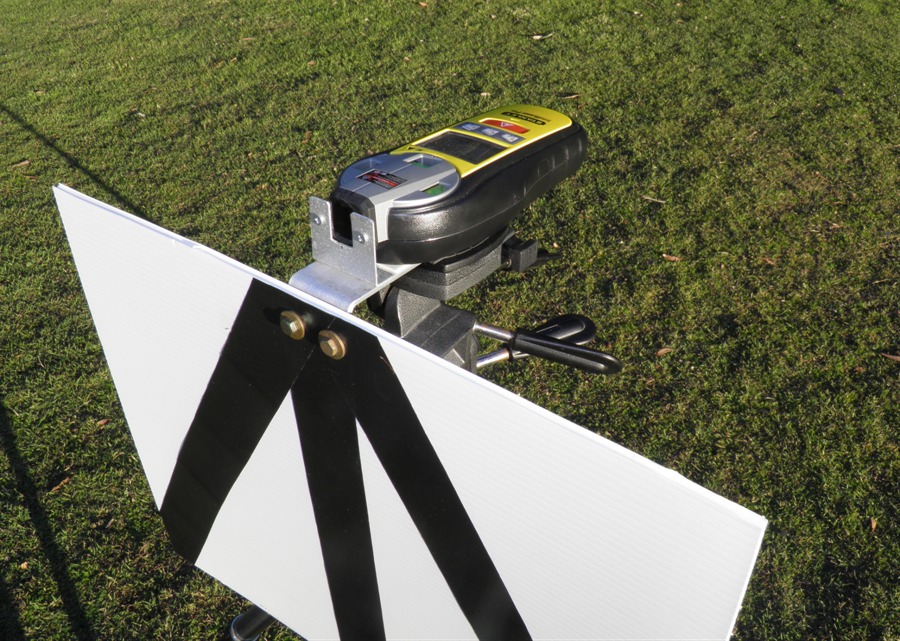
We have successfully tested a simple laser device for helping to find lost rockets in tall grass. It is mostly designed to find small pyro rockets that typically don't carry other forms of trackers or GPS transmitters, but it is equally useful for finding water rockets. Full details of how the LaRF works are here:
http://www.aircommandrockets.com/day133.htm

Shadow II Repairs
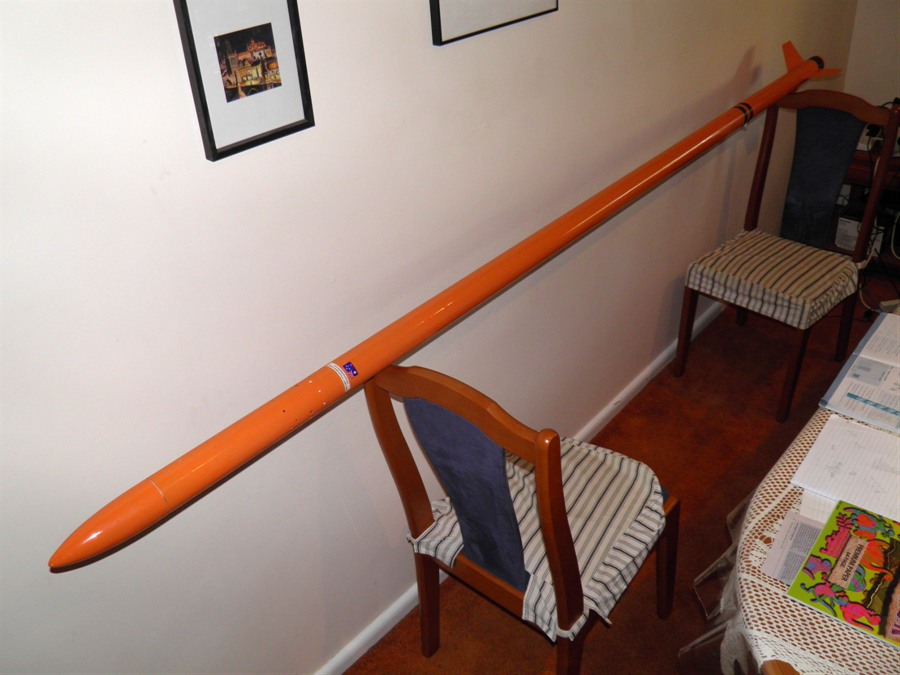
The Shadow II has been repaired and is ready for flight again. We still need to do a pressure test to make sure everything is good. The Shadow II build log has been updated with the more photos:
http://www.aircommandrockets.com/shadow_2.htm#_210413

Launcher Upgrades
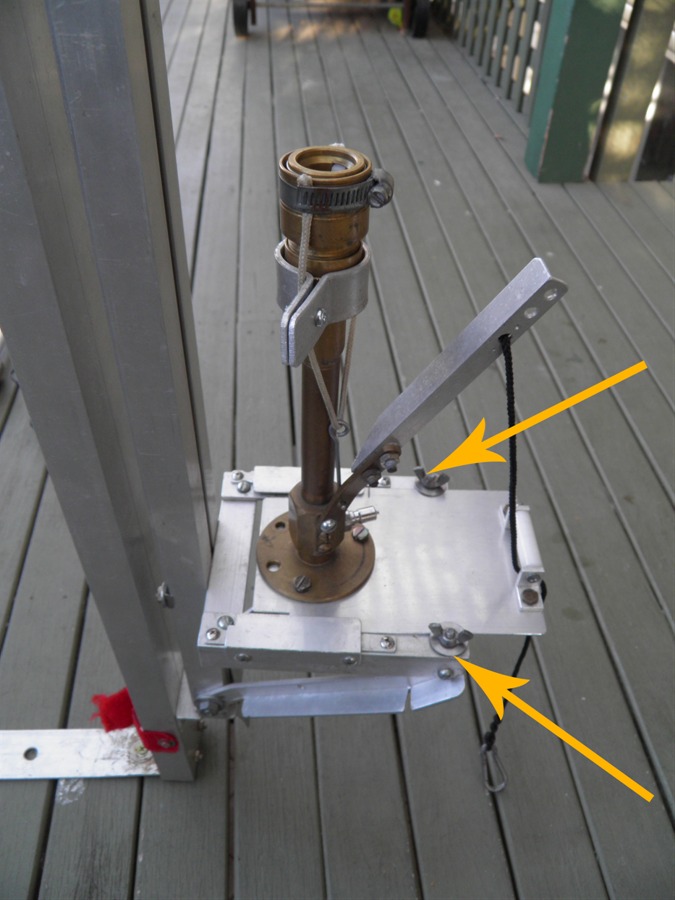
We have upgraded our quick launcher to be completely tool-free now so it is easy to quickly change configuration depending on the types of rockets being launched. The update includes a video.
http://www.aircommandrockets.com/day133.htm

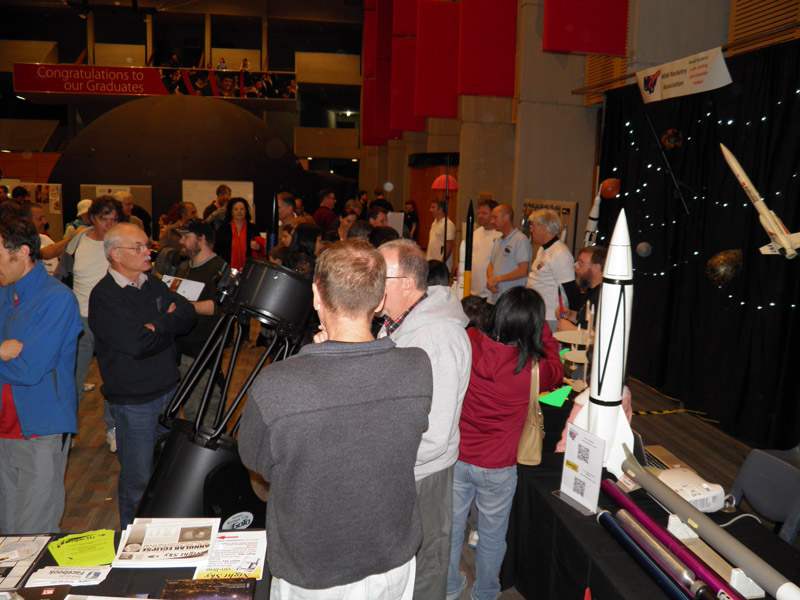
Macquarie University Astronomy Open Night
We again helped out with the NSWRA stand at the open night. It was a very busy night with lots of people to talk to.

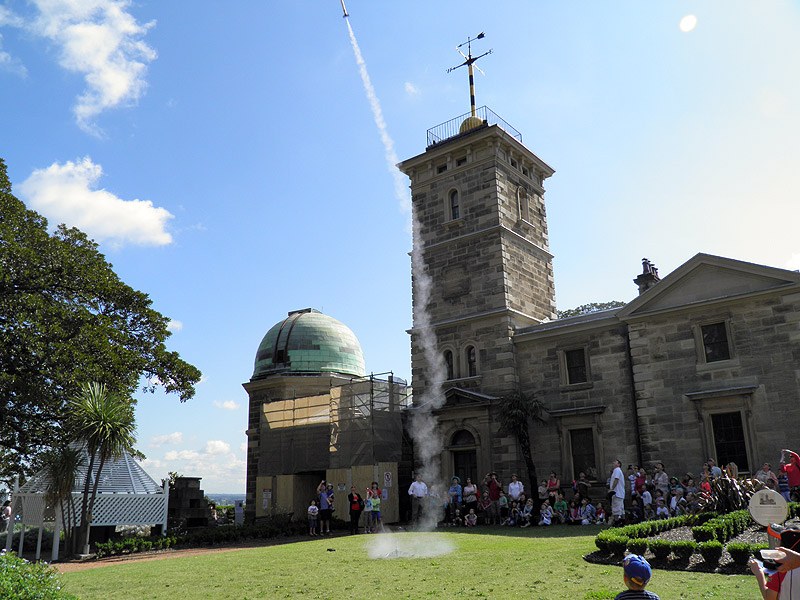
Sydney Observatory
NSWRA also had a stand at the Sydney observatory this year. There was also great turn out for this event.

LaRF (Laser Rocket Finder)
We have successfully tested a simple laser device for helping to find lost rockets in tall grass. It is mostly designed to find small pyro rockets that typically don't carry other forms of trackers or GPS transmitters, but it is equally useful for finding water rockets. Full details of how the LaRF works are here:
http://www.aircommandrockets.com/day133.htm
Shadow II Repairs
The Shadow II has been repaired and is ready for flight again. We still need to do a pressure test to make sure everything is good. The Shadow II build log has been updated with the more photos:
http://www.aircommandrockets.com/shadow_2.htm#_210413
Launcher Upgrades
We have upgraded our quick launcher to be completely tool-free now so it is easy to quickly change configuration depending on the types of rockets being launched. The update includes a video.
http://www.aircommandrockets.com/day133.htm
Macquarie University Astronomy Open Night
We again helped out with the NSWRA stand at the open night. It was a very busy night with lots of people to talk to.
Sydney Observatory
NSWRA also had a stand at the Sydney observatory this year. There was also great turn out for this event.
Friday, April 05, 2013
Painting The Sky
This week we launched the Inverter rocket again a couple of times. This time though, we filled the middle 3 spliced-pairs with different coloured water to see if we could change the water stream colour mid flight. (As opposed to 3 simultaneous colours as we sometimes fly in boosters) The results turned out fairly well and we were able to get the colour to change from pink to blue to green.
Here is the full flight report from the day:
http://www.aircommandrockets.com/day132.htm

We also attempted the Materials challenge again, but this time with fins that were attached better. We were happy with the results, and achieved a flight time of 8.8 seconds. More details are also available in the flight report above.
Here is the full flight report from the day:
http://www.aircommandrockets.com/day132.htm

We also attempted the Materials challenge again, but this time with fins that were attached better. We were happy with the results, and achieved a flight time of 8.8 seconds. More details are also available in the flight report above.
Thursday, March 28, 2013
Materials Challenge and Clark Cable tie launcher
Almost two weeks ago we had a go at one of the 10 challenges we set a while back - the Materials Challenge. Basically you have to build a water rocket using only PET plastic bottles. You are not allowed to use any glue, tape or any other materials! It was a fun challenge and things didn't quite work out as we planned but we'd like to visit it again to improve a couple of things in order to get more performance.
 The full report with details of how the rocket was made is here: (video included)
http://www.aircommandrockets.com/day131.htm
Because we couldn't use our regular nozzles for the challenge (they are not made of PET), we also built a Clark Cable-tie launcher to launch the rocket. We've also put together a tutorial on how to make the launcher. It fits a standard Gardena release head so it can be used it with our regular launchers.
The tutorial is here: http://www.aircommandrockets.com/construction_9.htm


http://www.aircommandrockets.com/day131.htm
Because we couldn't use our regular nozzles for the challenge (they are not made of PET), we also built a Clark Cable-tie launcher to launch the rocket. We've also put together a tutorial on how to make the launcher. It fits a standard Gardena release head so it can be used it with our regular launchers.
The tutorial is here: http://www.aircommandrockets.com/construction_9.htm

Thursday, February 14, 2013
Shadow II CATO, Good Inverter flight
I've put together the most recent flight report of the last launch day.
http://www.AirCommandRockets.com/day130.htm
We only had two launches on the day. The Shadow II had fun scattering itself around the launch pad, but it's unusual CATO was interesting to see and has given us some more insight into possible failure modes of high pressure water rockets. It also drives home how much energy is inside these rockets and why it's important to remain at safe distances at all times. The report goes into some detail about what we think happened.

The Inverter rocket behaved itself this time and had a great flight. The flight report contains lots more photos and two videos from the day.

http://www.AirCommandRockets.com/day130.htm
We only had two launches on the day. The Shadow II had fun scattering itself around the launch pad, but it's unusual CATO was interesting to see and has given us some more insight into possible failure modes of high pressure water rockets. It also drives home how much energy is inside these rockets and why it's important to remain at safe distances at all times. The report goes into some detail about what we think happened.

The Inverter rocket behaved itself this time and had a great flight. The flight report contains lots more photos and two videos from the day.

Wednesday, January 30, 2013
Shadow II and Inverter Flights
Last weekend we had the opportunity to launch the Shadow II again. The Shadow had a couple of minor issues. One was a small launcher leak where the hose quick connector screws into the launcher, and the second was that the on-board camera didn't record. The flight went really well though and we ended up with a new altitude PB. We will have another go at the next launch.
 We also flew the Inverter rocket for the first time. It also had some issues and ended up getting some damage when it hit hard. Overall though we were very happy with the flight as a lot of things did work.
We learned that the overall concept works especially with all the internal restrictions. It flew nice and stable and the rocket segments didn't twist around the rocket axis. We are already half way through the repairs and should be ready to fly again in a couple of weeks.

The full flight report with pictures and highlights videos is here:
http://www.aircommandrockets.com/day129.htm
.

We learned that the overall concept works especially with all the internal restrictions. It flew nice and stable and the rocket segments didn't twist around the rocket axis. We are already half way through the repairs and should be ready to fly again in a couple of weeks.

The full flight report with pictures and highlights videos is here:
http://www.aircommandrockets.com/day129.htm
.
Subscribe to:
Posts (Atom)